


Consider it an awkward coincidence: The final Republican debate before the Super Tuesday primary took place in Arizona, at the epicenter of the national immigration debate. When the remaining four candidates took the stage on Wednesday night, they were asked about the state’s tough crackdown on illegal immigration, which has defined the local Republican Party in recent years, buoyed the hopes of local Democrats and been condemned by, among others, the U.S. Department of Justice. The candidates needed to answer carefully.
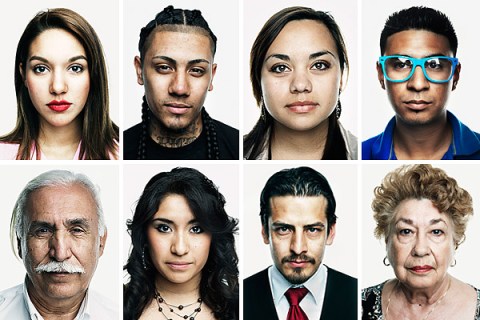
Though the GOP base in Arizona is still roiled by the influx of undocumented immigrants into the state, the Obama campaign is betting that a backlash led by the growing Latino community can turn Arizona into a new presidential battleground in 2012. This is the subject of my cover story in the new issue of TIME, available online to subscribers Thursday and on newsstands Friday. For the cover, photographer Marco Grob traveled to Arizona to shoot an amazing gallery of portraits of Latino voters.
MORE: Read TIME’s Exclusive Interview with Marco Rubio
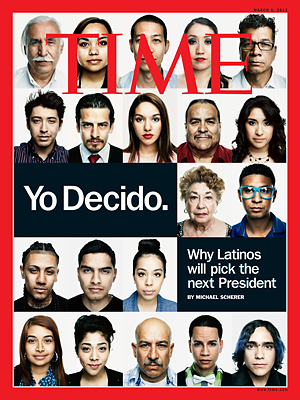
Photographs by Marco Grob for TIME
In the coming weeks, the Obama campaign will open its fourth field office in Arizona, a state no Democrat has won since Bill Clinton and which native-son John McCain won in 2008 by nine points. The location of the office, a storefront on Phoenix’s majority-Latino west side, matters. Just a few months ago, it was used by campaign volunteers for Daniel Valenzuela, a local firefighter, who mounted an underdog bid for the City Council on the theory that he could turn out Latino voters who don’t normally vote. He won big in 2011, as did the new Democratic mayor in Phoenix, Greg Stanton.
A group of young people calling themselves “Team Awesome” knocked on 72,000 doors in the city to support Valenzuela’s bid. They increased off-year turnout among the Latino community by 480%, more than delivering Valenzuela’s margin of victory. “There is a ripple effect that has the city and the county and the state of Arizona looking at the way they approach politics,” says Joseph Larios, 29, a community organizer now working with the state Democratic Party who helped Valenzuela develop his strategy. “It’s impossible to say going after low-propensity Latino voters doesn’t matter based on what happened.”
For the Obama campaign nationwide, “expanding the electorate” increasingly means “expanding the Latino electorate.” If Obama is able to win heavily-Latino Western states like Nevada, Colorado and Arizona, he could still win in the electoral college even if he loses historically key states in the industrial Midwest like Ohio and Wisconsin. “If we do our grassroots stuff right on the ground in all these Western states, which we will, because it’s something we are good at,” Obama campaign manager Jim Messina told me, “we could seriously change the outcome.”
At the same time, Republicans have generally done a dismal job through the primary of appealing to Latino voters. George W. Bush won more than 40% of the community in 2004, but in a recent Latino Decisions poll conducted for Univision, 72% of Latinos said the GOP either did not care about their support or was hostile to their community. The 27% who sensed hostility represented a seven point increase from April of 2011, when the same pollsters asked the question. “Conservatives have not realized how their tone and rhetoric has turned people off,” says Jennifer Korn, who led George W. Bush’s Latino outreach effort in 2004.
PHOTOS: Being Latino in Arizona
There are many within the Republican party urging a moderation in tone. Marco Rubio, the newly elected Cuban-American senator from Florida, and a potential vice presidential pick, is trying to make that shift happen. “I’m always trying to remind my colleagues that if they lived in Mexico or anywhere in Latin America, and their kids were hungry, every night went to sleep hungry, and your country provided no opportunity for you to feed them, you’re telling me that there’s nothing you wouldn’t do to feed them?” he says. “You’re telling me you wouldn’t go anywhere there was a job so you could send money to them?”
So in the days remaining before the Arizona primary, pay close attention to how the GOP Presidential candidates talk about immigration. They have little to gain from Republicans by pivoting to softer rhetoric, but they have much to gain in the general election.