

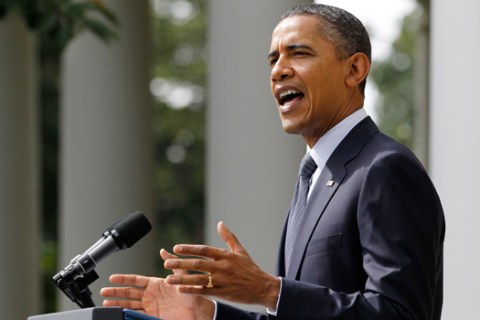
President Obama’s senior staff laid out his proposal to control the federal deficit while creating jobs on Sunday night. They claim the plan will cut more than $4 trillion over the next decade, largely from a $1.5 trillion increase in taxes that target the wealthy. The rhetorical touchstone, referred to repeatedly by the staff members in their background briefing, is the phrase fair share, which they say is what the rich should pay through a tax rate that is the same as or higher than that of middle-income Americans.
The GOP pounced, arguing that a massive tax hike on anyone would kill jobs and stunt the recovery. Republican Wisconsin Congressman Paul Ryan said the Obama plan would produce less investment and job creation by taxing those with the resources to power a recovery. “If you tax something more, Chris, you get less of it,” Ryan told Fox’s Chris Wallace on Sunday.
(MORE: In New Tax Offensive, a Reversal of Obama’s Deficit Debate Strategy)
Then he broke out the GOP’s rhetorical touchstone for the debate: class warfare. “Class warfare, Chris, may make for really good politics, but it makes for rotten economics,” Ryan said.
Who wins politically in a battle between fair share and class warfare?
The technical side of the argument is easy enough to parse. Democrats, defending the idea of a progressive tax code, argue that the wealthy should pay at least the same tax rate as the middle class, and perhaps even a higher rate. Republicans, by and large, say fairness is based on the proportion of the overall tax bill that is paid by different groups: the wealthiest 1%, for example, paid 38% of all federal income taxes in 2008, while the bottom 50% paid only 3%, says the Heritage Foundation.
(PHOTOS: Barack Obama at 50)
Politically, it’s more complicated. Clearly both sides reach their base with their message. Fair share is straight-up union talk, and will resonate with the Democrats whom Obama wants to solidify and energize ahead of a year of tough economic wrangling. Class warfare opens wealthy wallets during campaign season and taps the active, enthusiastic and antigovernment Tea Party movement, which sees socialism under every Democrat’s bed.
Does either message have an advantage with the middle? Blue collar Reagan Democrats hate class warfare. There may be a racial, “dog whistle” component still resonating from the 1960s and Nixon’s Southern strategy, but the power of that is diminishing. Fair share may tap some anti–Wall Street anger in the middle, and polling is clear that most Americans think taxes on the rich should go up. But both messages seem primarily tailored to the base.
MORE: What John Boehner Wants from the Deficit Supercommittee