

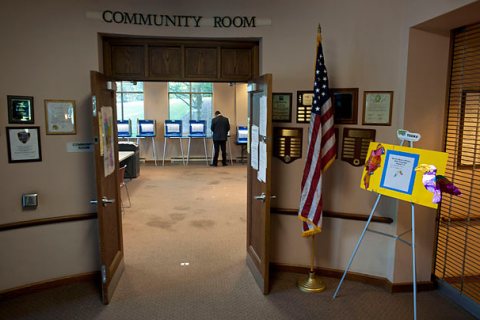
Voters take to the polls as Wisconsin holds the nation's largest ever recall elections in Glendale, August 9, 2011.
Wisconsin Democrats knocked off two GOP state senators on Tuesday night, exacting a hard-fought political price on Republican lawmakers for restricting collective bargaining rights of state and local employees. National advocacy groups funneled tens of millions of dollars into nine races, seven of which have now been decided, turning a parochial skirmish into an all-out proxy war between Tea Partying conservatives and labor-backed liberals. But the historic recall effort, launched in the wake of intense union protests in February and March, ultimately fell one seat shy of reestablishing Democratic control of the state senate. Two Democrats face reprisal recall votes on Aug. 16.
On an usual day of high energy and high turnout, Republican state senators Robert Cowles and Sheila Harsdorf cruised to wide-margin victories over their Democratic challengers, as fellow incumbent Luther Olsen managed to squeak by on a few thousand votes. Not all their colleagues were so lucky; Democrat Jessica King narrowly beat out Randy Hopper, while senator Dan Kapanke was easily felled by Democratic assemblywoman Jennifer Shilling. At the end of the night, the fate of the senate majority rested on Alberta Darling, the highest ranking Republican under threat of recall and one of the architects of the controversial collective bargaining legislation. She prevailed in the most bitterly contested and heavily funded recall fight, declaring victory near midnight as both parties scrapped over the final ballots.
The six districts that voted on Tuesday were ground zero in Wisconsin’s labor fight; each delivered substantial support to Walker’s gubernatorial bid last November, despite being carried by Obama in 2008. While the GOP successfully repelled the assault on its senate majority and approved new redistricting rules that will likely improve statehouse Republicans’ re-election odds in 2012, Tuesday’s close contest should still give them some pause. Walker himself could face a recall vote in early 2012 once his first year in office is up.
While twin Democratic victories marked a clear, if limited, rebuke of Walker and his agenda, there are few grand political or policy implications to draw from Wisconsin’s recall bonanza. Labor organizations have proved themselves very capable at collecting signatures to force action at the ballot box – six GOPers compared to just three Democrats were put on the recall slate in Wisconsin, and liberals in Ohio have collected more than 1 million signatures to hold a referendum on that state’s own new labor law in November – but these isolated retaliations don’t augur groundswell movements for 2012.
If anything, labor’s backlash against new restrictive laws in Wisconsin, Ohio and elsewhere, has merely chastened Republican governors who’ve seen their approval ratings plummet. “Earlier this evening I reached out to the leadership of both the Republicans and Democrats in the Assembly and State Senate,” Scott Walker said in a conciliatory statement late Tuesday. “I shared with them that I believe we can work together to grow jobs and improve our state.” Of course, Walker’s collective bargaining law and his statehouse majorities still stand.