


Notimex / Newscom
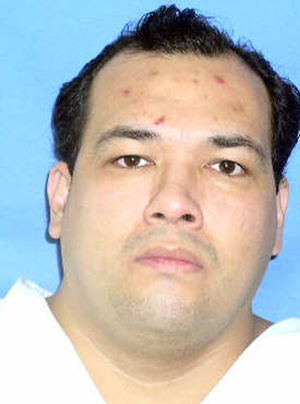
Two U.S. Presidents, the State Department and the Justice Department, an assortment of diplomats, military brass, and former judges all want the State of Texas to delay the scheduled July 7 execution of Humberto Leal Garcia Jr. But that may not be enough.
Leal was convicted of the 1994 sexual assault and murder of 16-year-old Adrea Sauceda in San Antonio. In subsequent appeals, Leal argued that his court-appointed trial attorney was incompetent — the man twice has his law license suspended — but given the savage nature of the crime, and incriminating statements by Leal and his brother, it’s not clear that a better lawyer would have made a difference.
So why have figures from former FBI Director William Sessions to former U.S. Ambassador to the United National Thomas Pickering taken an interest in Leal’s case? Because he is one of more than 50 foreign nationals sentenced to death in the U.S. without having access to their consulates.
A petition filed on Tuesday with the Texas Board of Pardons and Paroles, supported by letters from groups of retired generals, judges and ambassadors, argues that Americans abroad will be put at risk if the Vienna Convention on Consular Relations is not honored. Leal’s attorney, Sandra Babcock of the Northwestern University School of Law, asks the Board to recommend clemency for her client — or at least delay his execution long enough for Congress to pass a law mandating new trials for the foreign nationals.
“There can be little doubt that if the government of Mexico had been allowed access to Mr. Leal in a timely manner, he would not now be facing execution for a capital murder he did not commit,” Babcock writes—adding a claim of innocence on top of the plea to respect the Vienna treaty. “Mexico has had an extensive program for monitoring and providing assistance to its citizens facing the death penalty in the United States since the late 1980s.”
The petition is the latest in a long series of efforts to win relief for the foreign nationals on death row. In 2003, Mexico filed suit against the United States in the International Court of Justice on behalf of 54 Mexican nationals who were not given access to their consulates after being arrested and charged with capital crimes.
Article 36 of the Vienna Convention, which has been ratified by 173 countries, requires that when people are detained outside their own countries, their consulates must be notified. As Babcock observes in her petition, Iran followed this procedure recently after detaining two American hikers and charging them with espionage.
In 2004, the ICJ found in favor of Mexico and ordered the U.S. to grant hearings to the Mexican nationals. Then-President Bush issued an order to comply with the ruling, but Texas — in the case of Jose Ernesto Medellin — argued that Bush lacked the power to interfere in a state proceeding. In 2008, the Supreme Court agreed, and Medellin was executed.
The high court held open the possibility that an act of Congress could compel the states to give new hearings to the inmates. The Obama Administration is backing a measure to do just that, by withholding certain federal funds from states that do not comply. But the failure to pass a budget has put that legislation on ice.
“For Texas to proceed with [Leal’s] execution prior to full compliance with these treaty obligations would endanger the interests of American citizens and the United States around the world,” the diplomats write in their letter to the pardons board.
It may be a long shot to expect the board and Texas Gov. Rick Perry to halt Leal’s execution after permitting Medellin’s execution under similar circumstances with a Texan in the White House. The Supreme Court concluded that the ICJ judgment “constitutes an international law obligation on the United States,” but in the Lone Star State that collides with a simpler dictum: Don’t Mess With Texas. When State Department legal adviser Harold Koh wrote a formal request to District Judge Maria Teresa Herr of Bexar County earlier this year, asking her to take the Vienna treaty into account, he got nowhere.
Judge Herr went ahead and put Leal’s execution on the calendar.