

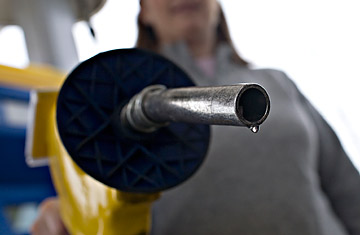
There are at least three things a presidential candidate can never do: order a Philly cheese steak with Swiss cheese, pronounce Nevada “ne-vah-da,” and question the wisdom of the massive federal corn subsidy program. The first two are easy enough. But this third law of the campaign trail may be tested this year as Republican candidates struggle to embrace the new spirit of straight-talking budget austerity, as championed by the likes of Paul Ryan, who reiterated Thursday that any serious deficit fighter would have to revisit agricultural subsidies. The ethanol tax credit program has been costing taxpayers roughly $5 billion a year since 2005, and that is not counting the increased prices from protectionist tariffs on foreign ethanol imports. The CBO reports that this subsidy bills taxpayers about $1.78 for every gallon of gasoline that is replaced by ethanol. What’s more, the evidence is clear, as Michael Grunwald explained a couple years back in TIME, that “Corn ethanol, always environmentally suspect, turns out to be environmentally disastrous.”
And yet, candidates have been going to Iowa to sing the praises of ethanol for decades. As 2012 approaches, self-styled fiscally conservative candidates, who want to cut the waste and fat out of the federal budget, have once again begun to justify a $1.78 per gallon federal taxpayer subsidy.
Earlier this year, Newt Gingrich got into a spat with the Wall Street Journal over his insistence that ethanol subsidies are really about small-town values. “Some pandering is inevitable in presidential politics,” opined the Journal’s editorial board, “but, befitting a college professor, Mr. Gingrich insists on portraying his low vote-buying as high ‘intellectual’ policy. This doesn’t bode well for his judgment as a President.”
Gingrich is not alone, of course. In his latest book, Mitt Romney says he doesn’t like government subsidies, but still supports the government subsidies for ethanol because they have helped build a nascent industry. Earlier this year, Katrina Trinko at the National Review published a detailed look at the pro-ethanol records of the various midwesterners looking at running in 2012. She called it “Cornhucksters.” Since then, Tim Pawlenty, a longtime ethanol subsidizer, has disappeared down the rhetorical rabbit hole as he tries to please both the Iowa corn folk and the fiscal conservatives. “We can’t just pull the rug out from under the industry,” he said in a recent speech. “There are going to have to be some changes, but we have to be fair-minded about it.”
Michele Bachmann has also tried to walk the line, saying vaguely that she would like a re-examination of the subsidies. Rick Santorum employs a similarly mealy-mouthed argument. “I would say we’re in a position right now where ethanol can be successful,” he told the Des Moines Register. “Moving forward, I’m not for new subsidies of any energy but my feeling is, if what the folks think they could do here is a phase out of a subsidy, I’d be all for it.”
All of these half-answers are vague on purpose. And in that, they fail many basic tests of fiscal conservatism. As Michael Tanner at the Cato Institute puts it, “The level of hypocrisy is breathtaking. For example, conservatives rightly denounced government subsidies to business when the auto industry was at issue. Why, then, are subsidies a good idea when directed to, say, Archer Daniels Midland?”
We are still early in the campaign. Months remain during which reporters can try to force the candidates to actually detail what they mean by their bland non-answers. That’s the reason we have these drawn-out races in the first place: to watch candidates eat cheese steaks, pronounce Nevada and reveal a bit of character on issues like ethanol.