

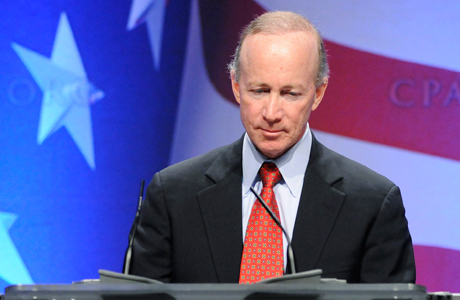
You kind of knew this was bound to happen after Indiana Governor Mitch Daniels called for a “truce” on social issues. The mild-mannered fiscal conservative might want to avoid contentious moral debates, but Indiana just became the first state in the country to pass legislation banning public funding for Planned Parenthood.
Daniels says he doesn’t yet know if he’ll sign the bill. His decision could determine whether or not he goes forward with plans to run for the GOP presidential nomination.
Social conservatives in the Indiana legislature added the Planned Parenthood measure to a bill that also bans abortion after 20 weeks–although it does provide exceptions when the woman’s life or health is “substantially threatened.” Daniels supported the underlying bill, but the Planned Parenthood rider puts him in a bit of a bind.
Daniels would have an easier choice if the bill addressed public funding of abortion. But it doesn’t. Public funds are already prohibited from being used to fund abortions. The legislation on Daniels’ desk would affect Title X funds, which are specifically intended for that allow Medicaid recipients to obtain family planning services. And despite the rhetoric issuing forth from social conservatives, funding for contraception and other family planning services is far less of a hot-button issue for most Americans than funding for abortion.
Opponents of Planned Parenthood know they hold a minority view, which is why they try to tie their defunding efforts to abortion legislation or to highlight Planned Parenthood’s abortion services, in an effort to conflate abortion and contraception. (There are activists who believe that birth control itself is a form of abortion, but they are in the extreme minority.) In this same vein, the Indiana bill would bar the state from providing grants and Title X dollars to entering into contracts with abortion providers (with exceptions for hospitals and ambulatory care centers), but again we’re only talking about family planning services.
The bill is expected to affect about $4 million in federal funds that would no longer go to Indiana. Planned Parenthood clinics in the state receive less than that annually, but Indiana would lose all of its Title X money because a state can’t pick and choose which family planning providers it wants to fund.
So what’s a fiscal-conservative-who-really-wants-to-avoid-social-issues to do? Daniels has three choices. He could veto the bill, which would probably not only end his presidential ambitions, but would also mark a dramatic break from a Republican party for which the willingness to demagogue Planned Parenthood has become a standard litmus test. Remember, not a single only seven U.S. House Republicans opposed legislation to defund Planned Parenthood. Or Daniels could sign the bill and accept that the move places his state smack in the middle of a contentious debate over social issues.
Or Daniels could simply do nothing. If he doesn’t veto the bill by next Wednesday, it becomes law without his signature. That route is unlikely, however, as it would likely anger activists on all sides and would do nothing to deflect attention from Indiana’s move to lead a fight against Planned Parenthood.
Daniels had planned on announcing his presidential plans at some point in the next few weeks. He can thank his colleagues in the legislature for making those deliberations more complicated than they already were.
UPDATE: Corrected at 8:45pm