

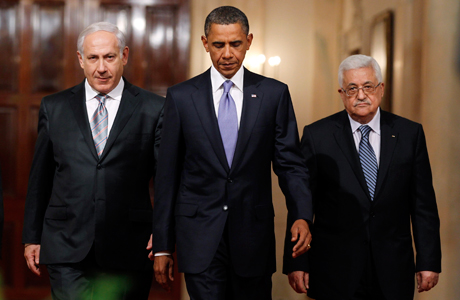
There has been much talk in recent weeks of how the likely U.N. General Assembly recognition of a Palestinian State in September is forcing the Israelis and the Americans, who oppose the recognition, to come up with preemptive peace plans. Today The New York Times fronts a narrower version of this story, focusing on the tension this has created between Prime Minister Netanyahu and President Obama over what their potentially competing plans should say — and who should go first.
It is easy to get the impression from all this coverage that serious plans that would move both sides toward peace might be in the offing. They’re not. If Netanyahu makes a grand speech about peace before Congress that includes a new offer of a settlement freeze, it will be news. And if Obama comes out and says the U.S. supports the creation of a Palestinian state based on the 1967 borders, land swaps and assurances of security for Israel, that will make news as well, even though Hillary Clinton has said as much already.
But it is important to remember that these plans are not intended to yield any action. They’re not designed to get real movement toward a peace deal and there’s no real expectation that they would. They’re designed to blunt the effects of September’s Palestinian statehood vote at the U.N. At a time when the Arab world is being completely reoriented and support for Palestinian concessions to Israel is politically dangerous for the regions Arab leaders, the peace plan talk “reflects a realization on the side of most that now is not the time to do something dramatic,” says Rob Malley, a former NSC Middle East staffer now with the International Crisis Group.
September’s declaration “is looming over us,” says one Israeli official. Israel worries that the Palestinian declaration could make negotiations harder and create tension over territory on the ground. The U.S. worries that Europeans might sign on for the vote, Palestinians could take international legal action, and negotiations could become even more difficult than they are now.
Further constraining the plans are domestic politics in the U.S. and Israel. Netanyahu is threatened from the right by Avigdor Lieberman and members of Netanyahu’s own Likud Party. Obama needs to protect himself from vocal GOP criticism of his Israel policy on the Hill.
And of course Bibi and Barack’s initial distrust of each other has only grown during their two years in office.
So when the two leaders try to make news with their peace plans in coming weeks, remember it’s not about peace. It’s about undermining support for September’s declaration of Palestinian statehood.